Enterprise AI Profile: Volkswagen Group
(Editor's Note: We will occasionally publish free profiles taken from our Enterprise AI Index, which is a data service that is part of Cloud Tracker Pro. The full database and library of profiles is available to subscribers.)
Futuriom Enterprise AI Profile
Organization: Volkswagen Group
Vertical industry: Automotive
Description: Headquartered in Wolfsburg, Germany, the Volkswagen Group operates 112 factories in 17 European countries as well as in 10 countries in the Americas, Asia, and Africa. It is presently Europe’s largest automotive manufacturer and produces passenger and commercial vehicles as well as motorcycles under numerous brands, including Volkswagen, Audi, Porsche, Lamborghini, and Bentley.
Last September, the company announced it would invest over $1 billion in AI by 2030 to streamline and speed up design innovation and auto production. "With artificial intelligence, we are igniting the next stage on our path to becoming the global automotive tech driver,” stated Hauke Stars, Member of the Board of Management for IT at the Volkswagen Group, in a press release. "AI is our key to greater speed, quality, and competitiveness – across the entire value chain, from vehicle development to production…. Our ambition: No process without AI.”
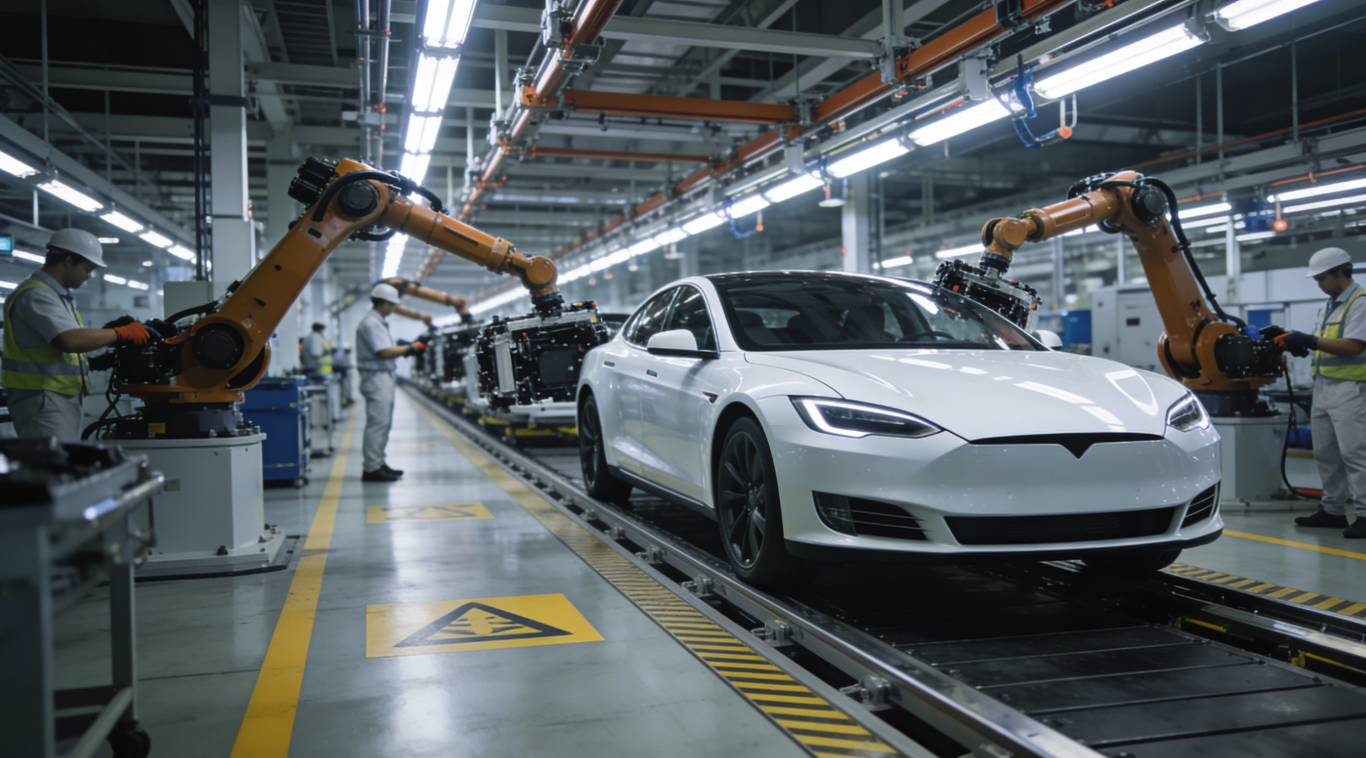
The Volkswagen Group already uses over 1,200 AI applications, including computer vision for quality control in its factories. Software built in partnership with France's Dassault Systèmes helps engineers from Volkswagen, Audi, and Porsche deploy digital twins to simulate vehicle components and test automotive designs. The company says this streamlines production by better preparing design information before fabrication starts, while also ensuring that designs meet global regulations and sustainability specifications.
Volkswagen has worked with AWS on a Digital Production Platform (DPP) or "factory cloud" that connects orders, works out logistics, and coordinates manufacturing processes. The DPP also provides platform engineering for turning out IT projects. So far, 43 Volkswagen Group sites in Europe, North and South America are connected to the DPP.
“The Digital Production Platform … is the digital nervous system of our factories – and the key to a future of AI-powered production,” said Hauke Stars in a press release.
Using the DPP, Volkswagen created the Guided Vehicle Completion app, which helps workers complete complex processes in vehicle assembly. A related DPP application named KI4UPS uses AI to help assembly line teams reduce manual work by identifying electronic issues before anything breaks or halts the line.
Volkswagen also relies on the DPP at the Wolfsburg and Ingolstadt sites in Germany, where the system analyzes images in real time during production for improved quality control. Volkswagen says that since DPP is based on AWS cloud services, the chance of disruptions in production are minimized.
The ongoing development of the DPP, Volkswagen says, represents an overall effort to move to what it calls software-defined vehicles (SDVs), where software plays the major role in automotive manufacturing. In this vein, a $5 billion joint venture between Volkswagen and electric vehicle company Rivian Automotive, called RV Tech, has been working on SDVs with a team of over 1,500 engineers in several countries.
The RV Tech group is developing designs for Volkswagen, Scout, and Audi brands in which all vehicle functions are controlled through a central core of intelligent computers, with new upgraded features added “over the air” through software—no visits to the dealership required. RV Tech’s first “reference” vehicles are in winter testing this first quarter of 2026.
Volkswagen is looking ahead to developing what it calls a Large Industry Model (LIM), an AI model based on data from multiple automotive suppliers for use in design and manufacturing. The carmaker plans to model this project on Catena-X, a secure data exchange architecture supported by Volkswagen, BMW, BASF, Mercedes-Benz, SAP, Siemens, ZF, and T-Systems. Catena-X isn’t an AI system itself, but it readies data for use in AI applications.
AI Platforms and Models Used: Multiple AWS services, including Amazon SageMaker; Dassault Systèmes 3DEXPERIENCE
Key Success Factors: The Volkswagen Group anticipates savings of up to four billion euros by 2035 from the deployment of AI across its factories and offices. The company’s AI-driven platform engineering tools will help speed the product development cycle for Group brands by at least 25 percent, Volkswagen estimates.
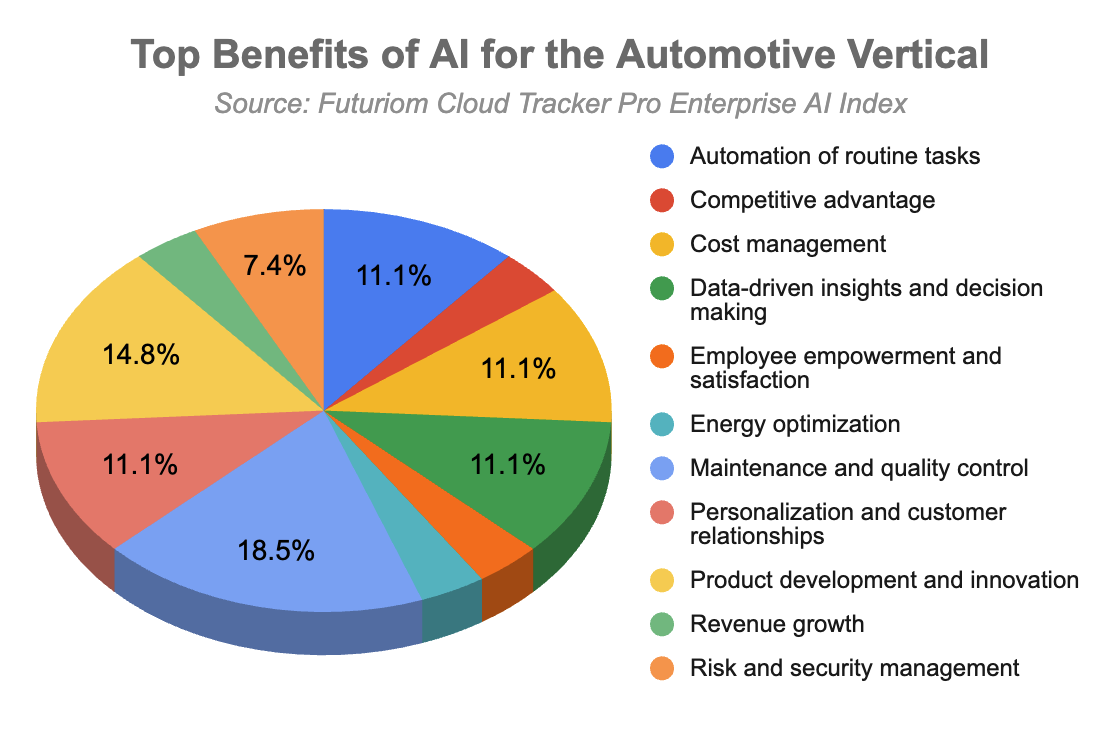
Note: According to Futuriom’s data, the primary benefit of AI in the automotive vertical is maintenance and quality control, both key elements of smart carmaking factories.
Futuriom Take: The Volkswagen Group’s approach to AI centers on cloud-based services developed with key technical partners using AI-infused platform engineering and a variety of AI applications.