SpaceX Drives AI Speculation to New Heights

As far as iconic market events are concerned, you can’t do better than last week's SpaceX initial public offering (IPO). The SpaceX debut on the Nasdaq (SPCX) has left its mark as the largest IPO in history, but it also raises more questions than it answers.
The main question: How does a company with barely $20 billion in revenue and heavy losses get a valuation of $2.1 trillion? The short answer is: Elon Musk.
If you dig deeper into the numbers, SpaceX is like some sort of hallucinogenic fantasy, combining space travel, AI, social media, and mobile communications. A year ago, it didn’t even exist in its current form.
With a paltry $30 billion in revenue projected for the calendar year 2026, SpaceX has a fraction of the revenue of the largest companies on earth, yet its valuation implies it's breathing down their necks. SpaceX has projected its revenue to fall between $25 billion to $30 billion in the calendar year 2026. That gives the company a price/sales (p/s) valuation of more than 100 times sales.
The questions to ask: Will SpaceX dominate all of the markets it's in? Some of them? Can it become a huge AI player? Can the currently unprofitable company buck the odds of growing into its current $2.3 trillion valuation, which today represents a multiple of more than 100X on 2026 projected sales?
Huge Numbers, With Losses
Let's drop into the numbers.
After pricing 555 million shares at $135 each, SpaceX shares vaulted another 20% and closed Friday at $160.95 after its first day of trading, giving it a public market valuation of $2.1 trillion. On Monday, shares rose a further 20% in trading, giving it a market cap of $2.5 trillion.
The company raised $75 billion in cash from its IPO. By both the amount raised and the market cap, it was the largest IPO in history, outdoing Saudi Aramco’s 2018 IPO, which raised a paltry $25.6 billion for a $1.7 trillion valuation. SpaceX founder Elon Musk became the first trillionaire on paper, and the IPO was estimated to have created 4,400 employee millionaires.
Just to put things in perspective: At the time of its IPO, Saudi Aramco had $356 billion in revenue with net income of $111 billion. It supplies oil to the world.
In comparison, Amazon is expected to book $800 billion in sales with a market cap of $2.5 trillion. That gives Amazon a p/s ratio of only 18. Microsoft projects $350 billion in sales with a market cap of $2.9 trillion for a p/s of 10. That's right, SpaceX has a market cap almost close to Microsoft's, with one-tenth of the revenue.
Let's go further. NVIDIA trades at a p/s ratio of 10, so SpaceX's valuation is about 5 times that. NVIDIA is projected to reach $370 billion in revenue in 2026. With 70% gross profit margins, NVIDIA might be earning more than $200 billion this year, with a market capitalization only twice that of the money-losing SpaceX.
Space, AI, and Advertising
Almost everything about SpaceX is unique, including its makeup. It's a mashup of businesses founded by Musk, including the social media platform X and the AI infrastructure company xAI. SpaceX was originally focused on space operations and its Starlink satellite communications service, which provide the bulk of revenue. But it was positioned for the IPO in February of this year when it acquired xAI, giving it more of an AI flavor, which boosted its valuation. A savvy move.
Digging into its business segments, Starlink provided the bulk of the $18.5 billion in reported revenue for 2025. The net loss in 2025 was $4.9 billion, the bulk of which came from AI infrastructure investments.
SpaceX was for many years a profitable company after it figured out how to send objects into space at a fraction of the cost of its major competitors, including NASA, which is now a partner. Then it developed the successful Starlink satellite communications service, which beams powerful broadband to most locations on earth. Now it's also an advertising AI company.
The business segments are as follows (according to the company's SEC filings):
- Space segment. Includes its launch services and NASA contracts, which generated $4 billion in revenue in 2025. This segment spent $3 billion in R&D that year to fund Starship development.
- The connectivity segment. Driven by Starlink, this accounted for $11.4 billion in revenue in 2025.
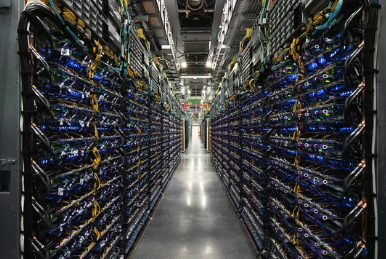
- The AI segment. This includes the recently acquired xAI company, and it generated $3.2 billion in revenue in 2025. Most recently, SpaceX was investing in new capital spending on xAI datacenter capacity at an annual rate close to $30 billion. It rents some of that capacity to customers such as Google and Anthropic.
- Advertising segment. This includes the X social media platform and accounts for about $2.25 billion in annual revenue.
So where does a $2.3 trillion valuation come from?
Musk has shown a talent for creating new businesses out of nothing, as well as for combining businesses that can have natural synergies, such as merging a battery company with Tesla.
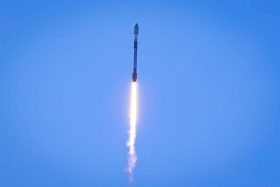
Musk also has a documented history of using the hallucinogenic drug Ketamine. That might be relevant to SpaceX. Like all good hallucinogenic fantasies, most of the excitement around SpaceX is built around the speculation that it could become the most powerful communications and AI provider in the world. That vision, espoused by Musk, has SpaceX’s affordable space shuttle, Starship, ferrying a combination of powerful satellites and AI datacenters into space. This could become the most powerful connected AI system in the world.
But for now, that's a vision. SpaceX is still largely a speculative entity and a masterpiece of financial engineering. Because it’s backed by Musk, arguably one of the great business minds of history, it receives a premium valuation because of his history of combining businesses, innovating, and creating new business models.
How Big Is the Hype?
How premium is the SpaceX valuation?
In comparison, Google went public in August of 2004 with a price/sales ratio of 10. It had a $23 billion valuation with about $2 billion in sales at the time. Interestingly, Google still trades at a p/s of 10, with about $500 billion in sales and a market cap of $4.5 trillion.
Just for fun, let's pretend Google was SpaceX. If it had gone public with the same valuation, it would have received a valuation of $230 billion. It attained that valuation three years later, with a share-price increase of 10X in three years, rewarding IPO investors. But that shows you how hard it will be for SPCX investors to make money at a valuation of 100X sales.
With its IPO, SpaceX now becomes the linchpin of the AI bubble. Why is that? For SpaceX, the market authorities made exceptions to rules about both share lockups and stock-market indices. SpaceX has been "fast-tracked" to be included in the Nasdaq 100 Index in as early as 15 days. That means, as this more speculative stock gets added to the Index, the Index itself will have a riskier composition, diluting the share from more profitable and mature companies.
What do analysts say? Of course, many Wall St. analysts embraced the froth. Oppenheimer and New Street Research initiated coverage on the AI and space infrastructure giant with a bullish stance.
"SpaceX is the only vertically-integrated AI firm with the required capital, data, LLMs, hardware, manufacturing and engineering talent," Oppenheimer analyst Timonthy Horan wrote in a research note on Thursday.
Not everybody sees the skies as so sunny or the vision into space as so clear.
Morningstar analysts believe SpaceX is “significantly overvalued," as reported by CNBC. The analysts even wrote that xAI poses a “material threat of value destruction” to the company, with its huge thirst for capital to build AI datacenters. Morningstar’s discounted cash flow valuation of SpaceX is $780 billion, which is roughly 48% below its private market valuation of $1.5 trillion.
Whether or not you buy into the vision of SpaceX being the play toward a $28 trillion-dollar market of cosmic AI, there’s no doubt about one thing: Musk, for now, remains the undisputed leader of value creation in the technology markets.