AI Rack Systems Stay Customized Despite Standards Efforts

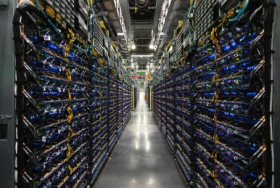
In today’s AI networks, a rack of chips and switches is designed to operate as a single enormous XPU, often linked to other racks to form even larger XPU entities. To achieve this feat, racks of equipment are specially designed to house multiple interconnected chips. And most of it is customized architecture.
Welcome to the world of AI rack systems, or integrated AI racks.
Many AI marketing materials today speak of rack-scale products, which can mean chips and servers designed to fit into a standard rack, making it easier to scale AI systems. In contrast, integrated racks furnish complete pods, or clusters of XPUs and CPUs, linked by specialized backplanes and equipped with their own power, cooling, and storage.
Today, these racks are largely customized, based on proprietary chips and connectivity protocols, though vendors purport to be working hard on achieving some general standards.
To access the rest of this article, you need a Futuriom CLOUD TRACKER PRO subscription — see below.
Access CLOUD TRACKER PRO
|
CLOUD TRACKER PRO Subscribers — Sign In |