AWS and Google Launch Mutual Connectivity Service

Google Cloud and AWS have unveiled a service that links their two environments over the WAN, eliminating implementation pain and spotlighting the growing importance both hyperscalers place on multicloud connectivity.
On the same day, AWS also announced a service based on Lumen’s network that allows customers to link their datacenters, branch offices, and remote locations to AWS directly and simply, avoiding past complexities.
Both announcements indicate a purposeful strategy by hyperscalers to expand their networking connectivity. Let’s take a look at the details.
Google and AWS United
The Google-AWS announcement had two aspects: Google announced that AWS is now a Cross-Cloud Interconnect partner, with connectivity jointly developed with AWS via another new service, AWS Interconnect - multicloud, also announced today by AWS. Google Cloud Virtual Private Clouds (VPCs) now can hook into AWS VPCs, eliminating a series of complicated steps otherwise required to connect the two clouds.
The jointly developed service, announced Sunday as AWS re:Invent opened in Las Vegas, is in public preview in Northern Virginia, Oregon, London, and Frankfurt, where Google and AWS have interconnected regions. More regions will follow, the vendors said. AWS has also issued specifications underlying the hookup on GitHub.
The news significantly expands AWS’s support for multicloud connectivity, a strategy it’s gradually adopted since 2019. Google is the first launch partner for AWS Interconnect-multicloud, though an AWS link to Microsoft Azure is planned for 2026. The new service also is the latest development in Google’s partner-focused Cross-Connect Cloud Interconnect project, which began in July 2024 with a link to Oracle Cloud Infrastructure.
Another AWS service, AWS Interconnect – last mile, its offering with Lumen, enables remote links from 1 Gb/s to 100 Gb/s over Lumen’s network to the AWS cloud, managed from the AWS console. The service appears to build on AWS Direct Connect, with Lumen being the launch partner for a new kind of comprehensive WAN connectivity. This service is in gated preview, AWS said.
Eliminating Complexity
The new offering from Google and AWS creates a transport element in Google Cloud that, along with an encrypted key sent to AWS, creates a multicloud connection within AWS, followed by establishment of an AWS Direct Connect Gateway (DXGW) ready for data transmission. There are no charges incurred for the transport of data, the vendors said.
The new connectivity replaces a series of steps that were formerly required to link to the two clouds together. These included the establishment of physical connections between clouds, logical configuration of VLANs and IP addresses, routing configurations, and security. All these needs are covered by the new service.
But that’s not all the hyperscalers are touting. Key advantages of the new service include, as noted, encryption via the MACsec protocol, along with key rotation by both vendors for greater security. Google and AWS also claim “quad-redundancy,” protecting joint customers from multiple simultaneous failures. There is also a monitoring system underlying the solution that reacts to failures before they affect the network.
“Integrating Salesforce Data 360 with the broader IT landscape requires robust, private connectivity,” stated Jim Ostrognai, SVP Software Engineering at Salesforce, in a prepared statement. “AWS Interconnect - multicloud allows us to establish these critical bridges to Google Cloud with the same ease as deploying internal AWS resources.”
The benefits of the Google-AWS hookup also extend to AI. Developers now can port data from one cloud to the other without having to construct complex infrastructure.
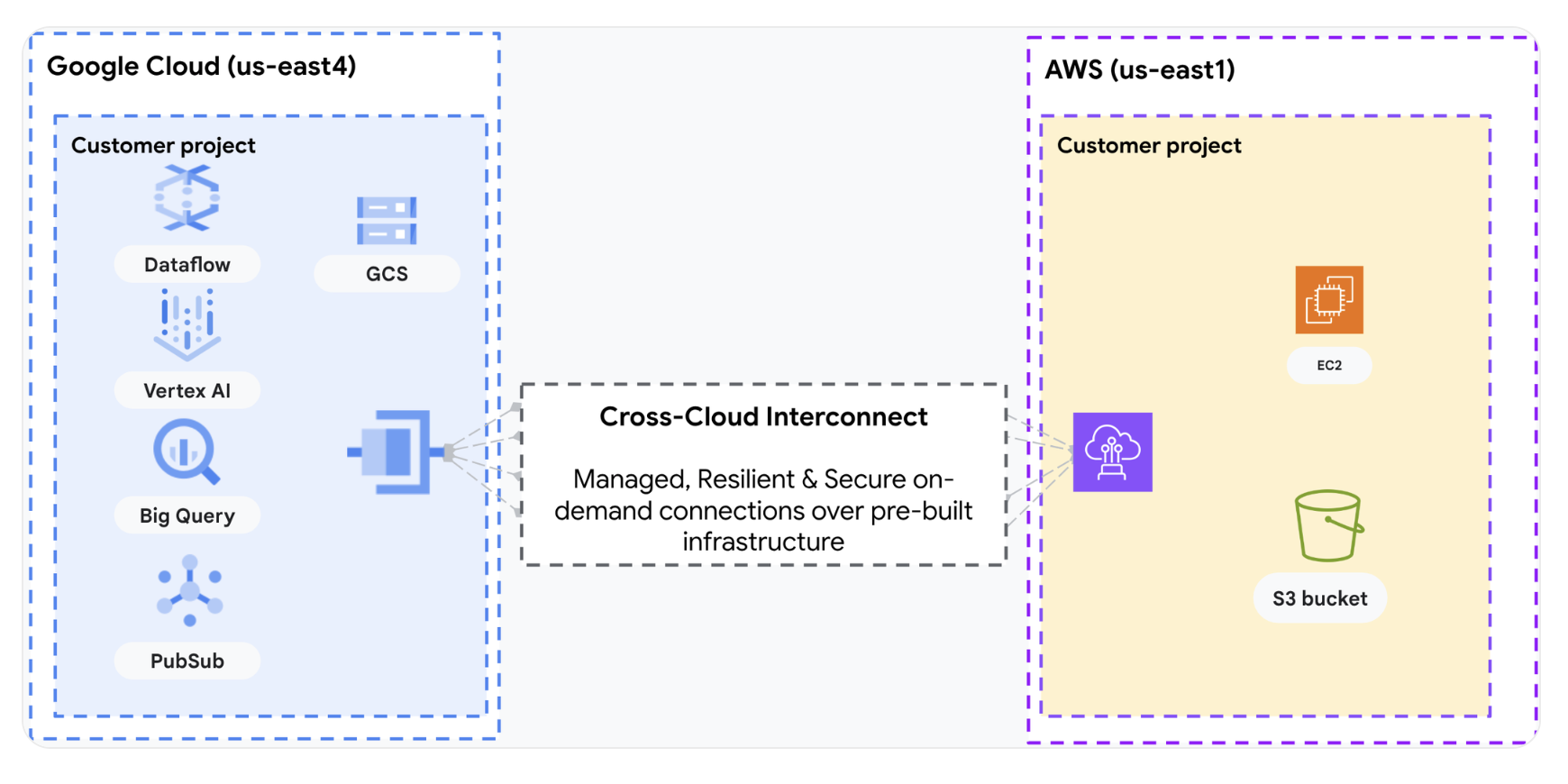
Google and AWS interconnected service. Source: Google
What About the Established Multicloud Market?
AWS’s push into multicloud connectivity comes at a time when vendors such as Alkira, Aviatrix (in part via a partnership with Megaport), Aryaka, and others offer established multicloud networking (MCN) services, developed in response to CSP and enterprise demand. These services are flexible and work across a range of clouds, not just two. Still, AWS’s entry into the multicloud connectivity market, and its outreach to remote sites, could threaten the position of some independent players who grew in the shadow of the walled gardens put up by most public clouds.
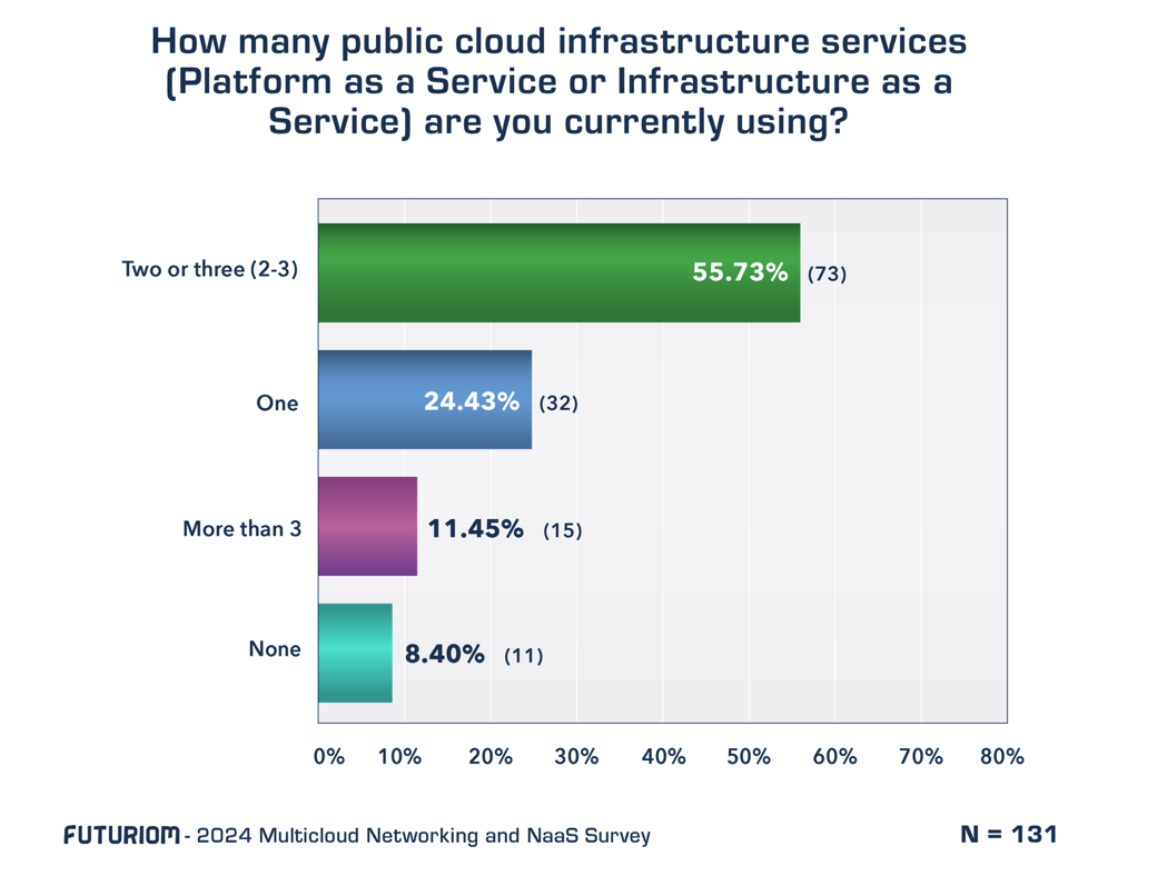
But there’s no indication that demand is shrinking, especially as large enterprises deploy hybrid cloud and multicloud configurations. Indeed, in Futuriom’s Multicloud Networking and SaaS Survey Report completed last year, over half of U.S.-based networking professionals surveyed said they were using two to three public cloud infrastructure services:
Futuriom Take: It remains to be seen whether the multicloud trend is big enough to allow independent players to continue to thrive, or whether AWS, Google, and other hyperscalers will edge out smaller companies with their purposeful innovations. The wild card could be AI; enterprises developing AI applications on AWS and Google Cloud will likely be drawn to the hyperscalers’ solutions, while use of other platforms may attract users to independent providers.