AMD Highlights Solutions for Agentic AI at Conference
AMD (Nasdaq: AMD) unveiled a series of new products at its Advancing AI 2026 conference in San Francisco last week, touting a “full stack” solution incorporating new CPUs, a ROCm overhaul for AI, and a centerpiece Helios rack system, among other announcements.
All of it was aimed at improving development and deployment of agentic AI in inferencing workloads. AMD CEO Lisa Su emphasized inference in her keynote speech last Thursday:
“We can say that in 2026, for the first time, the world is using more AI compute to run models than to train them… We think this year, roughly 60 percent of the global AI compute capacity will be used for inference… agentic AI, that’s accelerating the shift even faster.”
By 2030, AMD sees the total addressable market (TAM) for AI compute reaching $2 trillion, Su said. Of that, about $1.4 trillion will be accelerator chips, and $200 billion server CPUs.
Helios Centerpieced, Partnerships Stressed, ROCm Improved
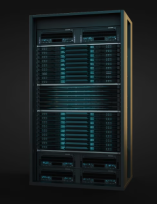
CEO Su led off her presentation by announcing that the company’s much-publicized Helios rack system is in full production and will be shipping by the end of this quarter. Packing 72 AMD Instinct MI455X GPUs, 18 AMD EPYC Venice CPUs, AMD Pensando DPUs, and ROCm open software optimized for AI, the units have been adopted by Anthropic, OpenAI, Meta, and Cerebras. That last company’s CEO Andrew Feldman stepped onstage during today's keynote to announce that Cerebras is incorporating its own ultra-low-latency wafer chips with Helios. DriveNets also has been working on its own integration with Helios, as have a number of other vendors.
At the end of the keynote, Su declared that Helios rack systems, along with Instinct accelerators, will be upgraded on an annual cadence, with new systems designed to support upcoming EPYC and Instinct chips Florence and MI600 in 2028. The MI600, already “deep in development” per Su, will “deliver the largest generational leap in the history of Instinct, putting us on track to deliver more than two thousand times higher inference throughput in just four years.”
Throughout Thursday's presentation, Su and other AMD executives stressed AMD's commitment to open technology and cooperative partnerships. One example: Arrcus and UfiSpace cooperated to combine Arrcus's ArcOS network operating system supporting RoCEv2 fabric with UfiSpace's switches, which are powered by Broadcom Trident and Tomahawk silicon. The solution in incorporated into an AI rack solution from Giga Computing that's based on AMD's EPYC and Instinct chips. Shekar Ayyar, Chairman and CEO of Arrcus stated in the press release:
"AI infrastructure needs to be complemented by smart, programmable networking. By integrating ArcOS deeply with UfiSpace's Tomahawk 6 and Tomahawk 5 Broadcom platforms, we give customers building AMD-powered AI clusters an open, high-performance Ethernet fabric they can deploy with confidence.”
Another notable announcement was ROCm.ai, a version of the company’s developer environment infused with AI that’s aimed at helping boost deployment of software for AMD systems. In the past, ROCm has been criticized as lacking some of the bells and whistles of NVIDIA’s CUDA developer platform, so improvements to ROCm could be significant if it proves to streamline agent development.
Bringing It to the Desk and Beyond
AMD also unveiled Ryzen AI Halo, a small “deskside” workstation for running models locally without cloud connectivity. According to AMD, small, open models are the future of development because they outperform larger, frontier models at a fraction of the cost. Again, the desktop system is geared to developers, another effort by AMD to compete against NVIDIA.
The Ryzen AI Halo announcement, made during today’s keynote by Jack Huynh, SVP and GM of AMD’s Computing and Graphics Group, was followed by a surprise appearance by Jeetu Patel, Cisco President and Chief Product Officer, who announced that Cisco Cloud Control will manage Halo AI along with the entire AMD estate, providing visibility and monitoring tokenomics. Currently in selective distribution, the solution will be generally available in Fall 2026.
Huynh also unveiled the AMD Kria AI series, a hardware unit based on x86 chips for development of physical AI and robotic systems, which AMD is presenting to compete with NVIDIA’s Jensen Thor, an Arm-based system.
Futuriom Take: Throughout today’s keynote presentation at AMD’s Advancing AI conference, CEO Lisa Su and other AMD executives stressed the company’s partnership ecosystem, its shift toward open-source agentic AI development, and its integrated hardware solutions (embodied in Helios) as key to its competitive position. While NVIDIA remains firmly ahead, AMD is carving its own niche and should prove a formidable rival in the AI infrastructure space.